The problem
For a plumber, the phone is the whole sales channel. No inbound form working in the background. No one in an office picking up what you drop. If it rings out, the enquiry is gone.
Three things follow from that:
- Callers start at the top and work down. Someone with a leak or a dead boiler opens Google and rings until a person answers. Whoever picks up first gets the job.
- Being good at the work and being reachable are the same hours. The deeper you are into a job, the less able you are to answer.
- The problem grows as the business does. More reputation means more calls, at exactly the times you're busiest.
Voicemail doesn't fix this. Someone standing in a flooded kitchen isn't leaving a message and waiting. They hang up and dial the next number on the list.
The calls you miss
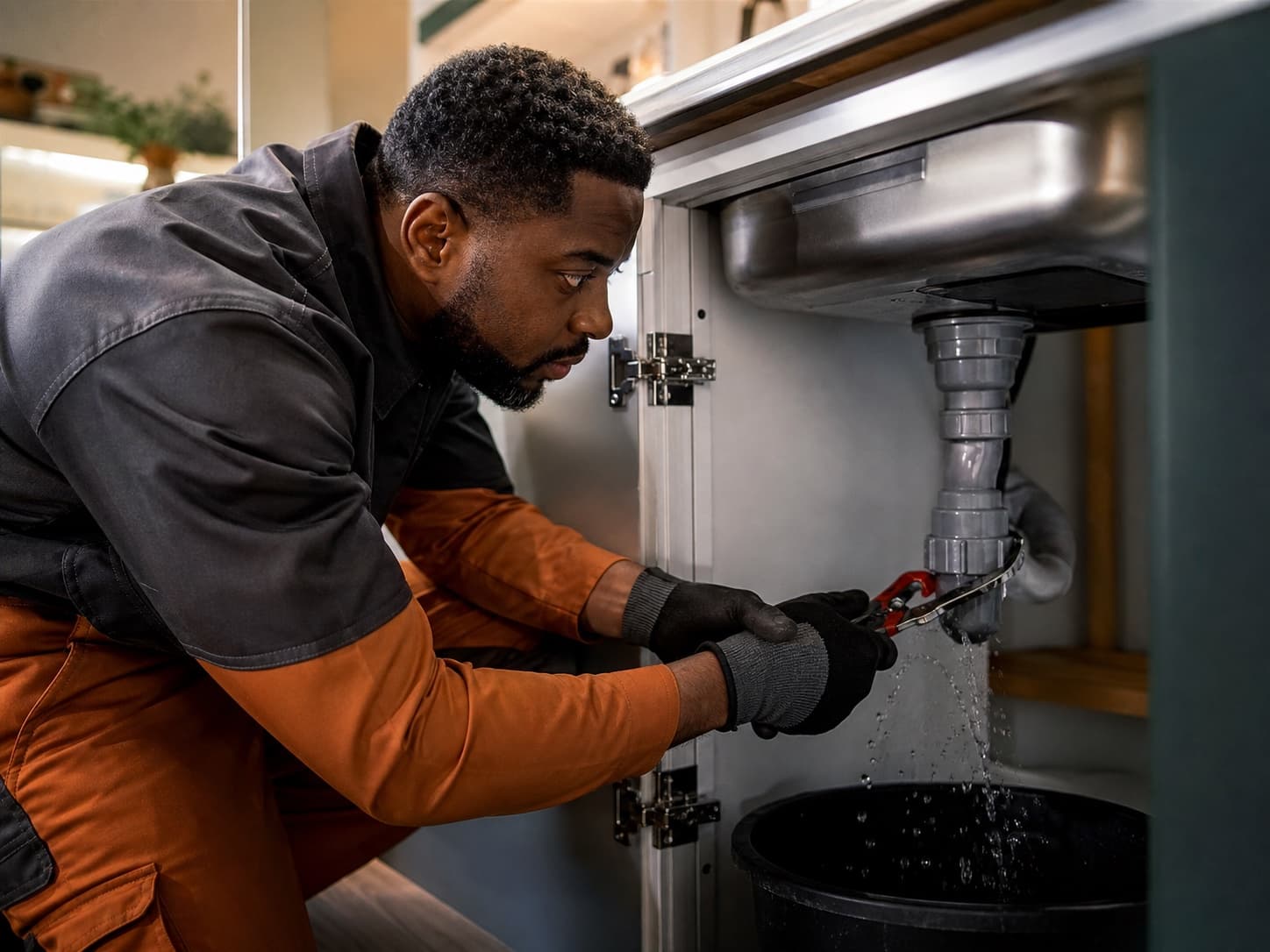
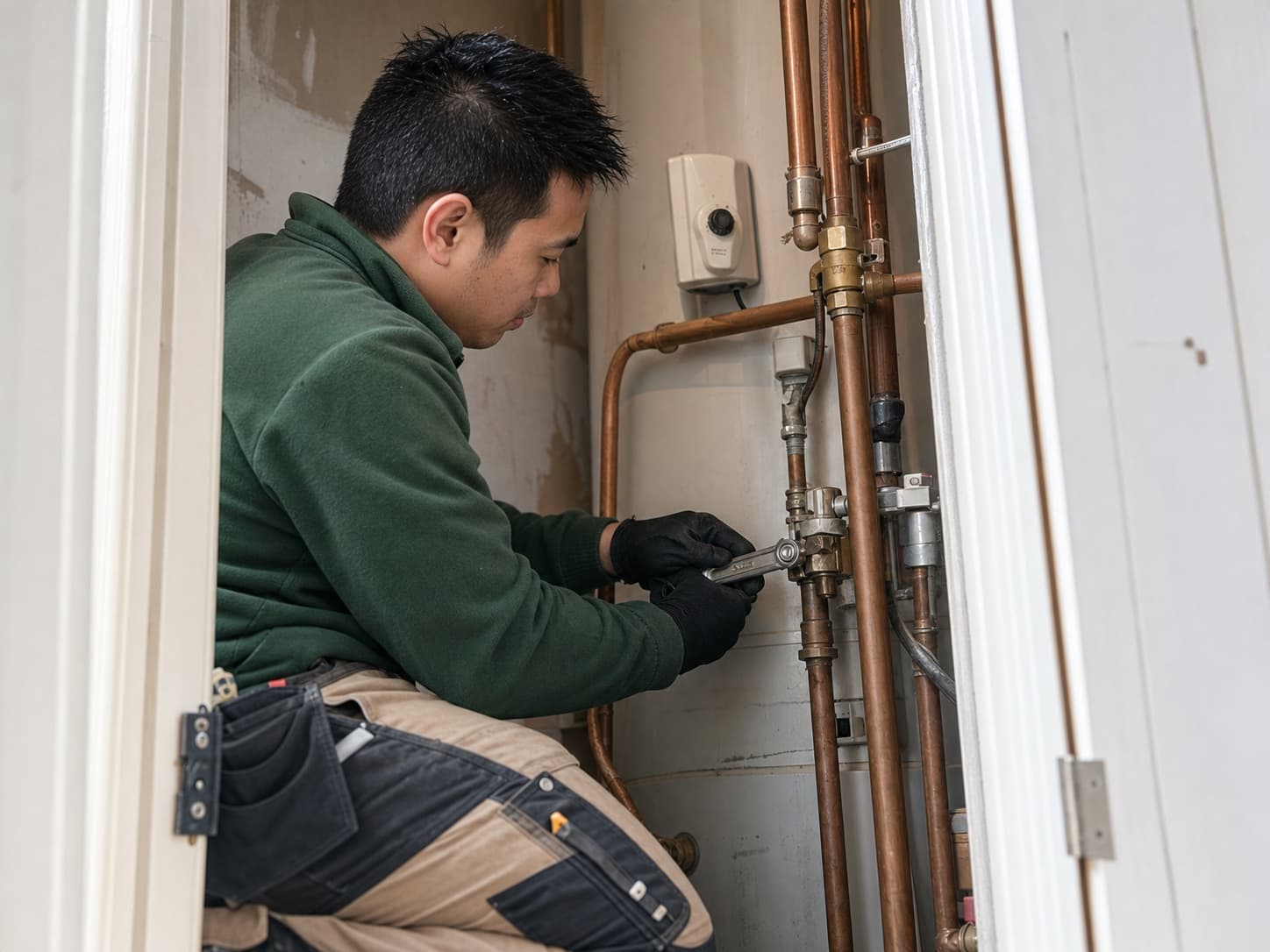
Elbow-deep in a cylinder cupboard. You can hear the phone going. You're working through a hot water cylinder fault and you can't answer. Four rings, then nothing. The caller tries the next plumber on Google.
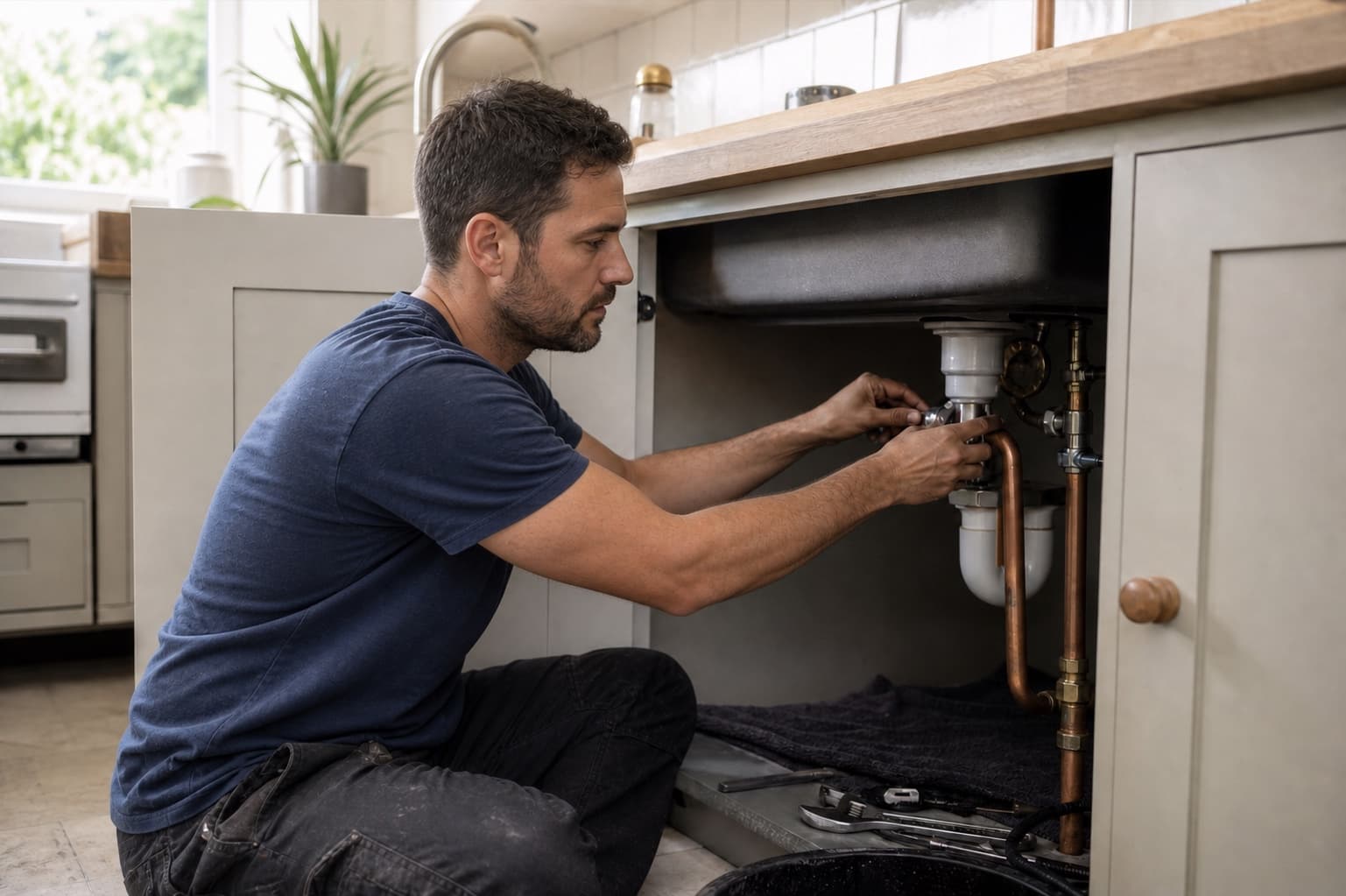
Tracing a leak under a kitchen floor. It takes concentration. Your phone is in the van. Three calls come in while you're finding the source. By lunchtime, two of those callers have already booked someone else.
Saturday morning emergency. Burst pipe, panicked homeowner, both hands on the wheel. The phone doesn't stop.
After-hours quote requests. Someone finds you on Google at 9pm, needs a like-for-like boiler quote, and calls your number. It rings out. They fill in a competitor's contact form instead.
Trade businesses lose an estimated £1,200–£4,800/month to unanswered calls. For plumbers, a single heating installation or bathroom refit represents a significant chunk of that. That estimate is based on typical UK trade job values and a 20–30% call conversion rate. Work out your own number.
How Telphi answers for a plumber
Telphi picks up immediately, in a clear, natural voice, with a greeting you've set. Here is a typical exchange.
Caller: "Hi, I need someone to look at my boiler – it's not firing up and the heating's completely off."
Telphi: "I'm sorry to hear that. Is this a fault with your current boiler, or are you looking for a replacement?"
Caller: "Fault – it's an eight-year-old Worcester, just stopped firing."
Telphi: "Understood. Is this an emergency – do you currently have no heating or hot water at all?"
Caller: "No heating, no hot water, yes – bit urgent."
Telphi: "Got it. Can I take the full address and postcode so we can check coverage?"
Caller: "It's 14 Marsh Lane, Bristol, BS3 4JD."
Telphi: "Perfect. And what days and times generally suit you for a call-out?"
Caller: "Anytime this week, really – sooner the better."
Telphi: "I'll send you a link now so you can book directly into our calendar. We'll confirm the appointment and be in touch before the visit."
You get a push notification with a structured summary: fault type, boiler make and age, address, urgency level, preferred timing. The caller books into your calendar via the link. You call back knowing exactly what you're walking into.
What you get after every call
- Call summary – job type, location, urgency, and anything specific the caller gave you
- Full transcript – the complete conversation, searchable in the app
- Recording – listen back at any time
- Urgent transfer – configure Telphi to pass genuine emergencies straight through to your mobile
- Spam filtered – sales calls and time-wasters are flagged before they reach your summary list
Booking
After qualifying the caller, Telphi texts them a booking link. They pick a slot from your live availability and book directly into your calendar. No back-and-forth. No double-booking. No admin time.