The problem
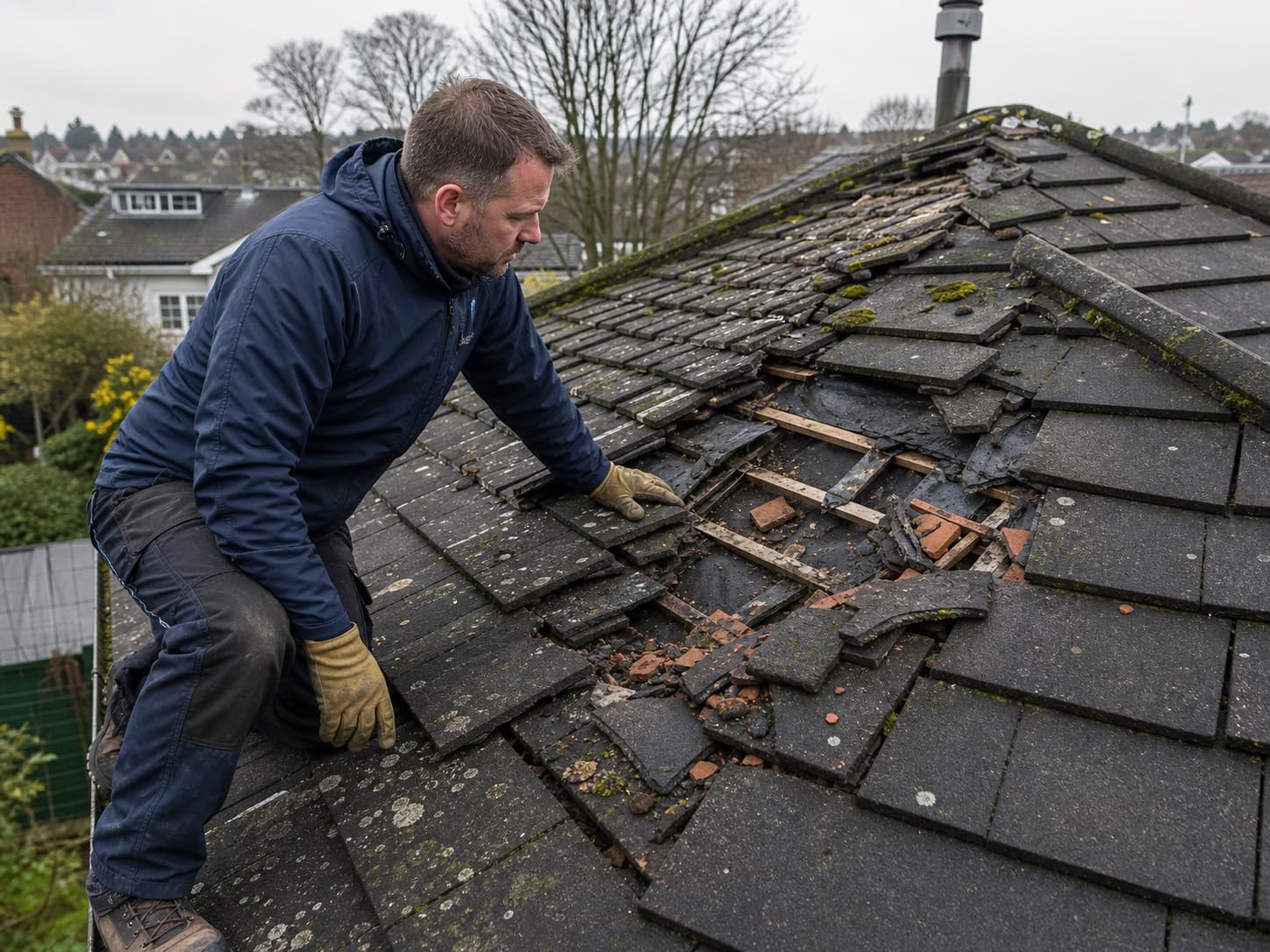
Roofing has a demand pattern no other trade deals with. Work doesn't arrive evenly. It arrives in a wall, the morning after high winds, when every homeowner in the area has found a slipped tile or a wet ceiling at the same time.
Three things follow from that:
- Your phone rings all day on the day you're least able to answer it. Demand and workload spike together, every time.
- A roof is the hardest place in any trade to take a call. Up a ladder with both hands committed, nailing felt, cutting lead. Answering safely isn't a matter of willpower.
- Urgent callers don't queue. Someone with water coming through a ceiling rings down Google Maps until a roofer picks up. That decision is made in minutes.
Then there's the Sunday problem. People notice water ingress after a wet weekend, at home, in the evening. Your phone is off, and by Monday a competitor has already been out and quoted.
The calls you miss
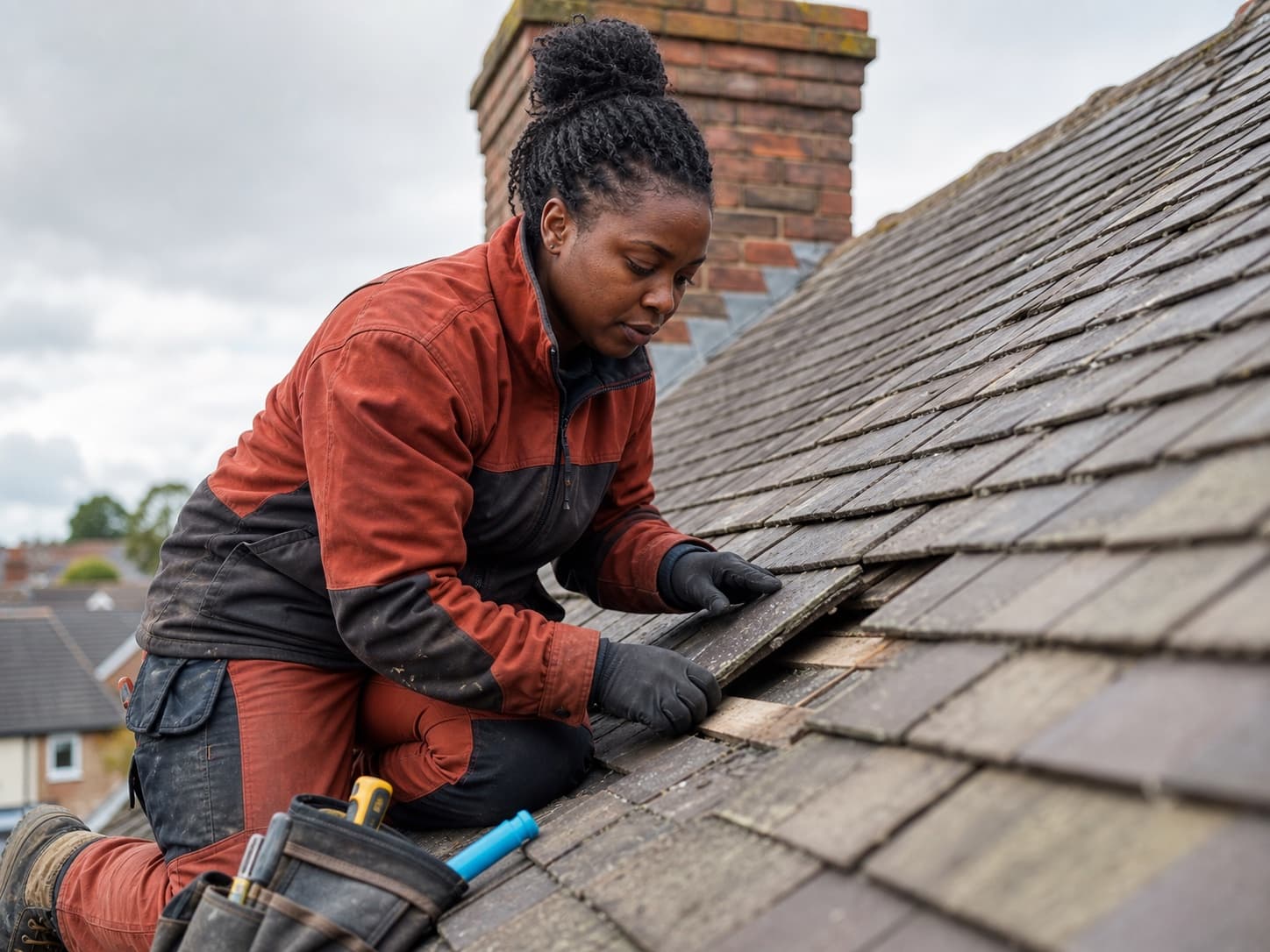
At the top of a ladder. You're part-way up a pitched roof replacing ridge tiles. Your phone is in your work trousers but answering it safely isn't an option. The homeowner with a failing flat roof calls, gets no answer, and calls the next number on Google Maps.
During a post-storm rush. High winds the night before means your phone rings constantly the following morning. You're already booked solid for three days and trying to prioritise. Calls you don't answer go to voicemail – but most callers don't leave one. They move on.
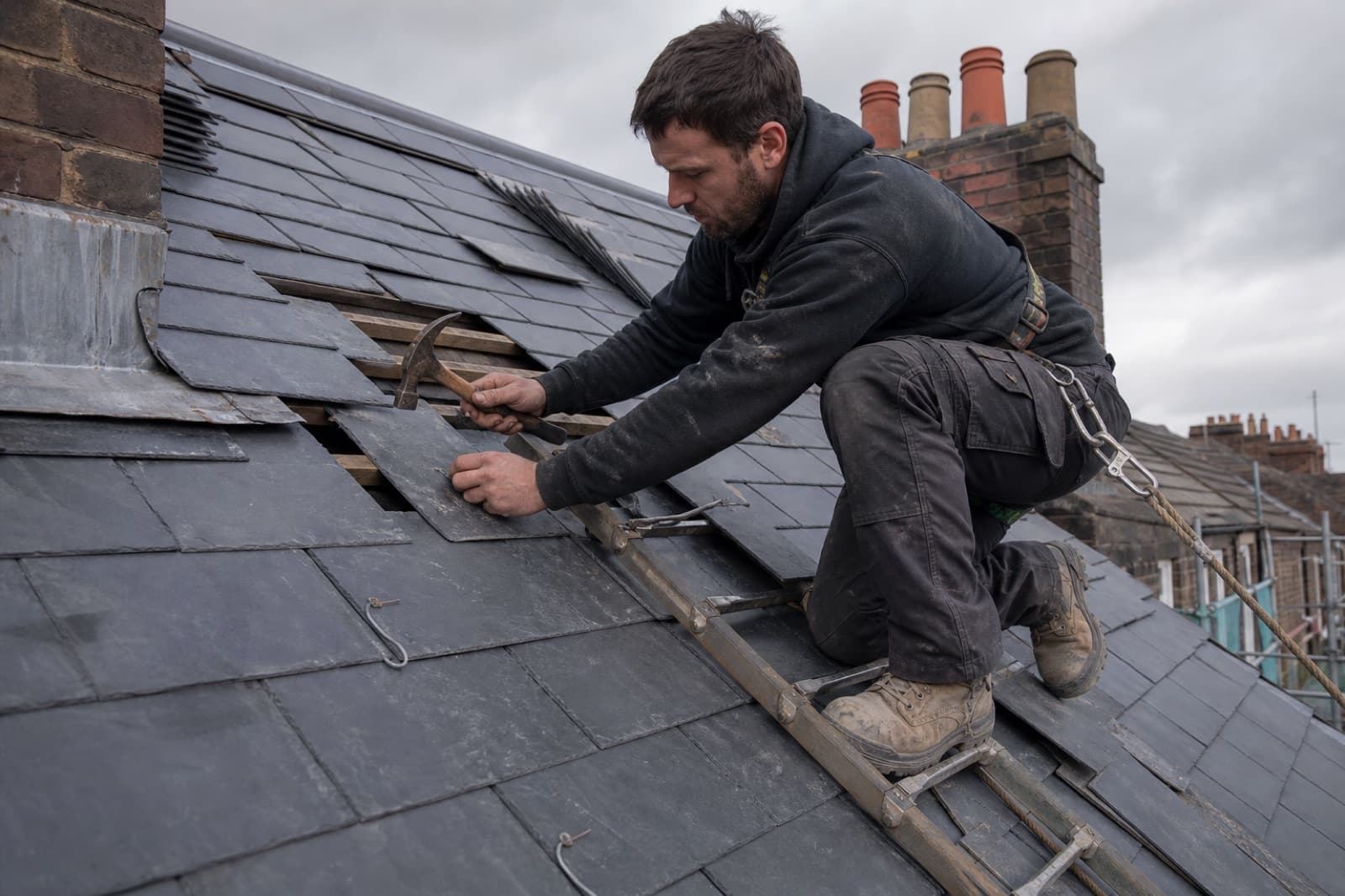
Nailing down felt or cutting lead. Both hands are occupied and the noise from the tools makes a call difficult even if you could answer it. A landlord calling about a rental property with a leak needs a quick response or they'll find someone who is available.
Sunday evening after a weekend of weather. Homeowners notice water ingress after a rainy weekend and reach for the phone. You're offline. The enquiry sits unanswered until Monday, by which point a competitor has already been out for a survey.
Trade businesses lose an estimated £1,200–£4,800 a month to unanswered calls. For roofers, the timing of that answer matters more than almost any other trade. Customers with damage want a response quickly. That estimate is based on typical UK trade job values and a 20–30% call conversion rate. Work out your own number.
How Telphi answers for a roofer
When a call comes in, Telphi picks up immediately in your business name and asks the questions that help you scope the job before you've spoken to the caller.
Caller: "Hi, I've got a leak coming in above my bay window – I think it might be the flat roof section."
Telphi: "That does sound like a flat roof issue. Is the leak active at the moment, or have you noticed it after recent rain?"
Caller: "It was dripping during the rain yesterday. It's stopped now but there's a damp patch on the ceiling."
Telphi: "Understood. Do you know roughly how old the flat roof is, and is it felt, GRP, or EPDM?"
Caller: "No idea – it's the previous owner's work. Probably ten or fifteen years old, felt I think."
Telphi: "That's useful. Can I take the full address and postcode so we can confirm coverage and get a survey booked?"
Caller: "It's 9 Heron Close, Sheffield, S10 5GT."
Telphi: "Thanks. I'll text you a link now so you can book a survey time directly. We'll come and take a proper look and let you know what's needed."
You get a summary in the app: roof type, leak status, property details, location, and approximate age of the roof. The caller books the survey directly into your calendar. You turn up prepared.
What you get after every call
- Call summary – roof type, fault description, urgency, and property location
- Full transcript – the full conversation stored and searchable in the app
- Recording – available to replay before you attend the survey
- Urgent transfer – configure Telphi to pass through calls where active water ingress is causing interior damage
- Spam filtered – insurance lead-gen calls and time-wasters stay out of your lead list
Booking
After capturing the job details, Telphi texts the caller a booking link. They pick a survey slot from your live availability and book directly into your calendar. No calls back. No scheduling back-and-forth.