The problem
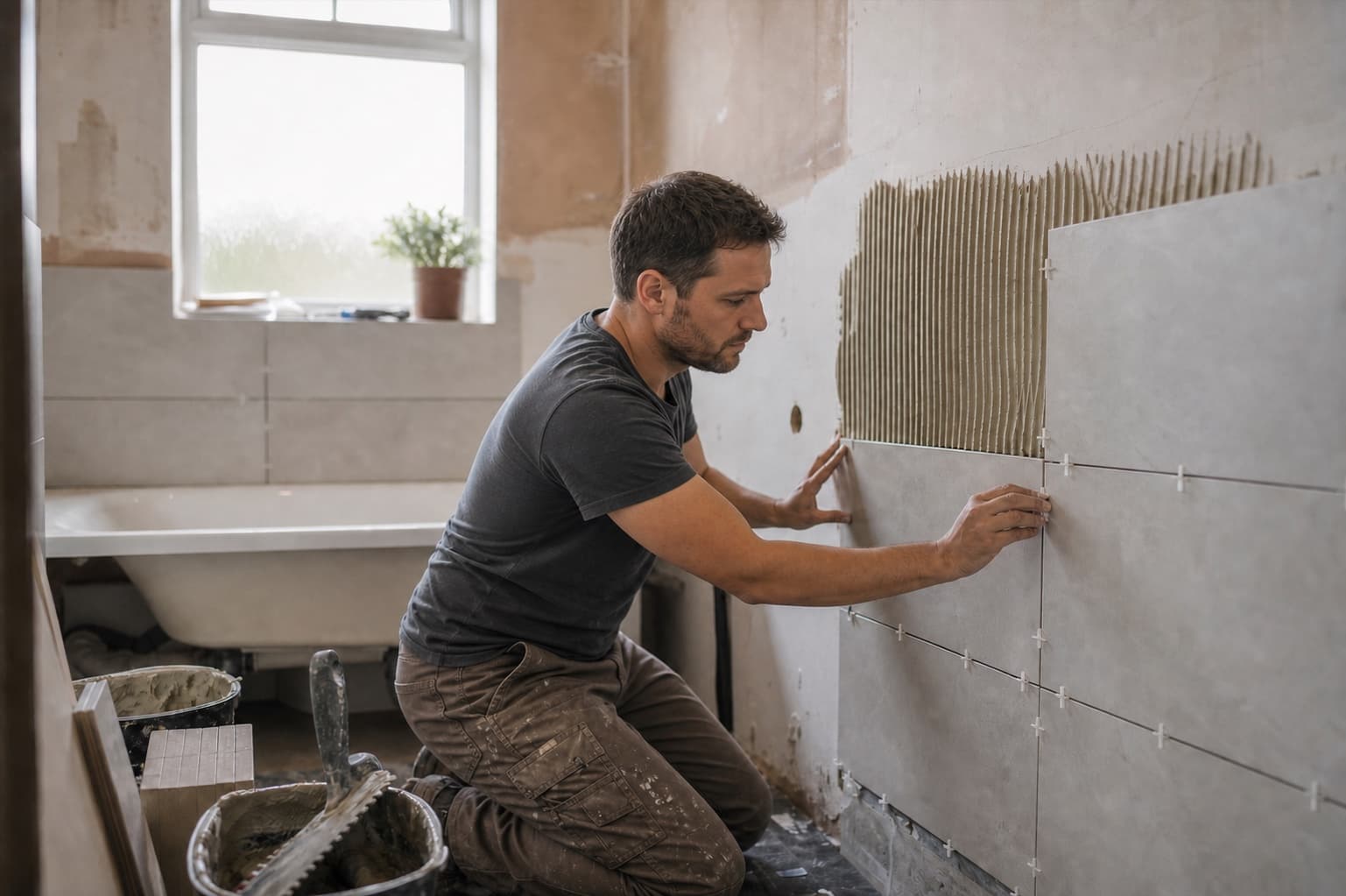
Tiling runs on open time. Once adhesive is on a wall you have a fixed window to get the tile set true, and that window doesn't pause because a phone is ringing. Stopping costs you the tile, the line, or both.
Three things follow from that:
- Most tilers choose the tile, every time. Which means the phone rings out through the whole of the working day.
- A conversation isn't physically possible. A cutter running in a small bathroom means you wouldn't hear the caller and they wouldn't hear you.
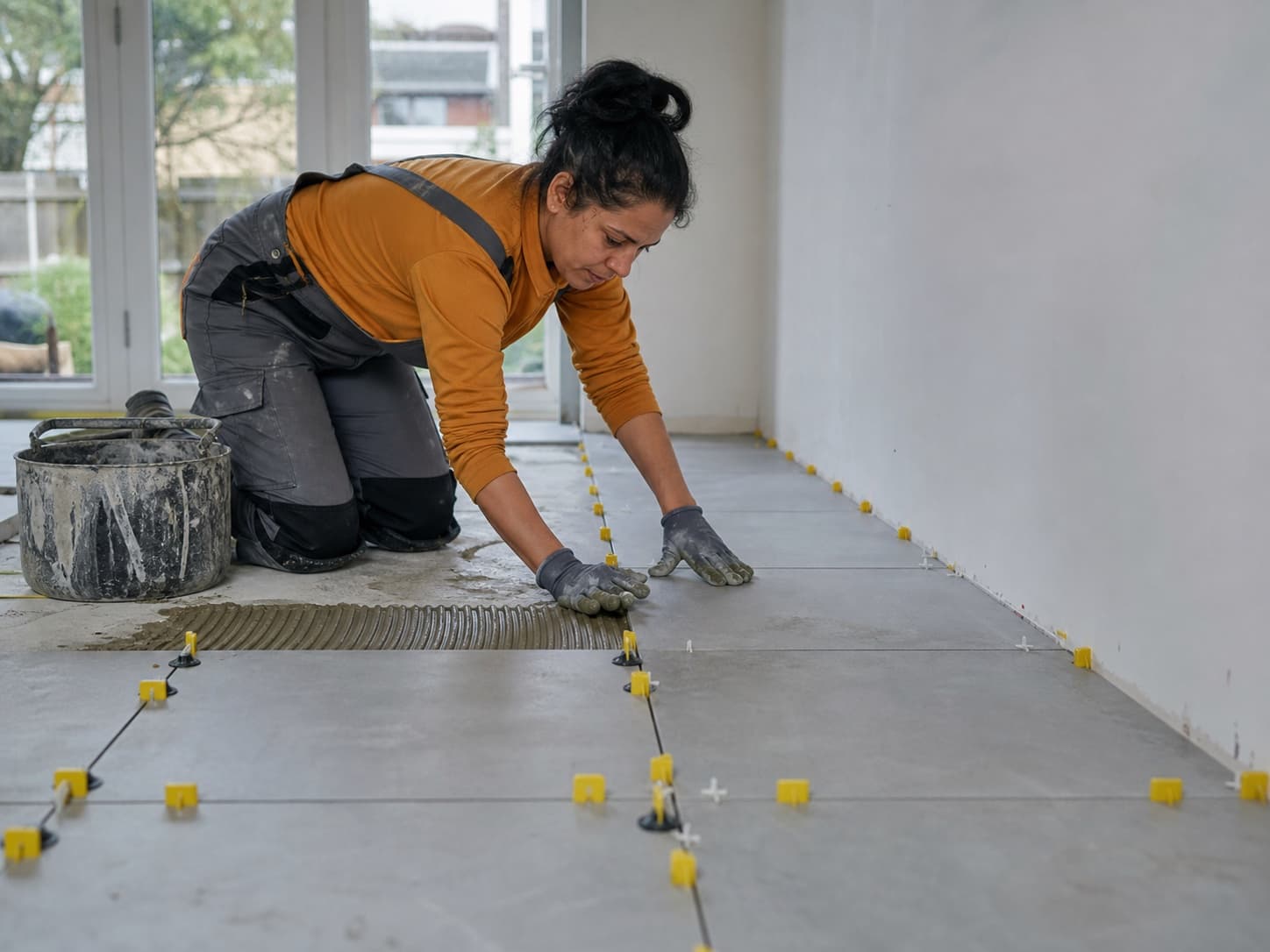
- You're losing a week, not an hour. A full bathroom retile or a kitchen floor is several days of income arranged in one phone call.
Enquiries land when you can't take them. Homeowners browse in the evening and move on within minutes if nobody answers. By the time you've cleaned your tools, the job has gone to someone whose phone was answered.
The calls you miss
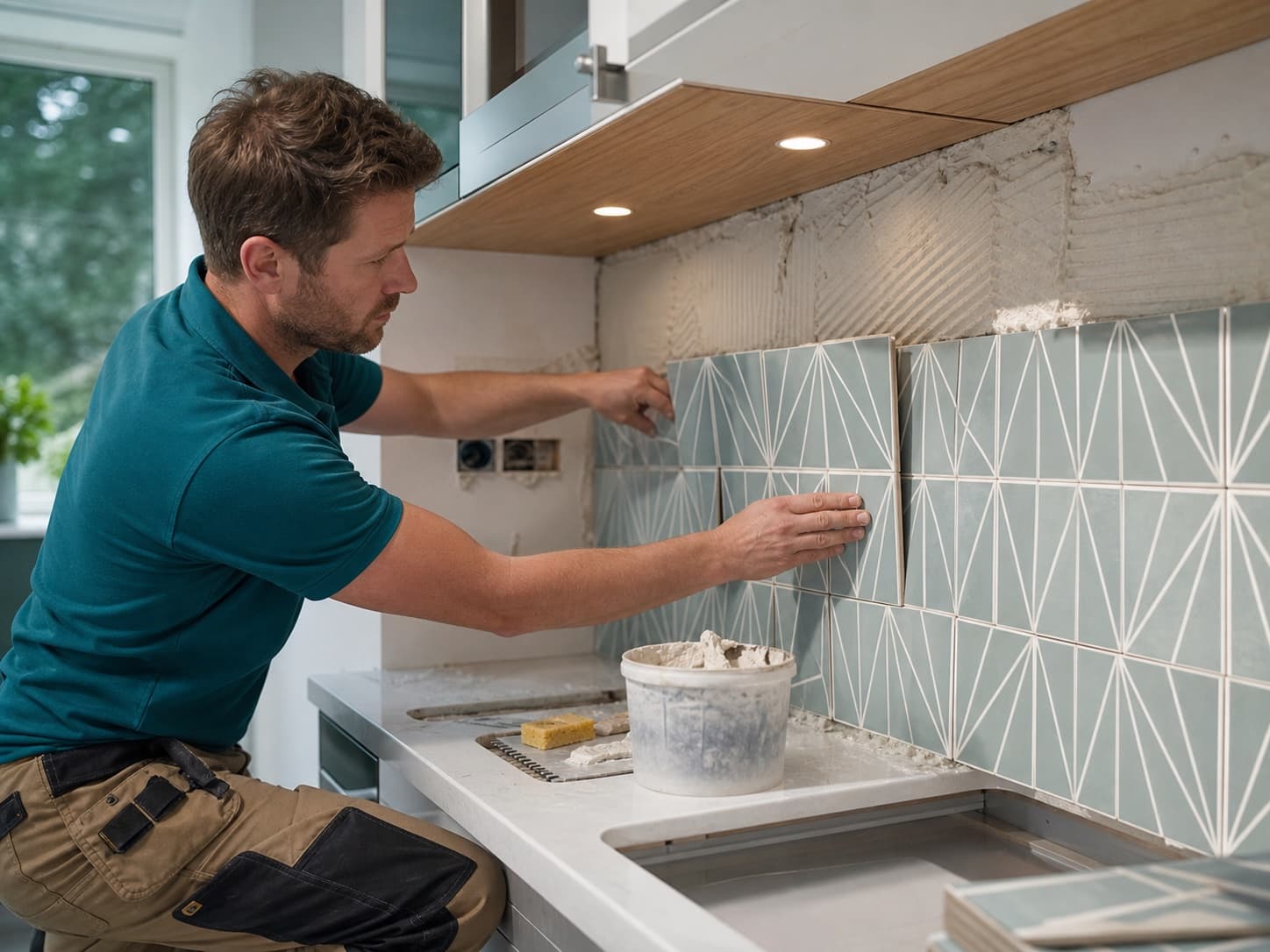
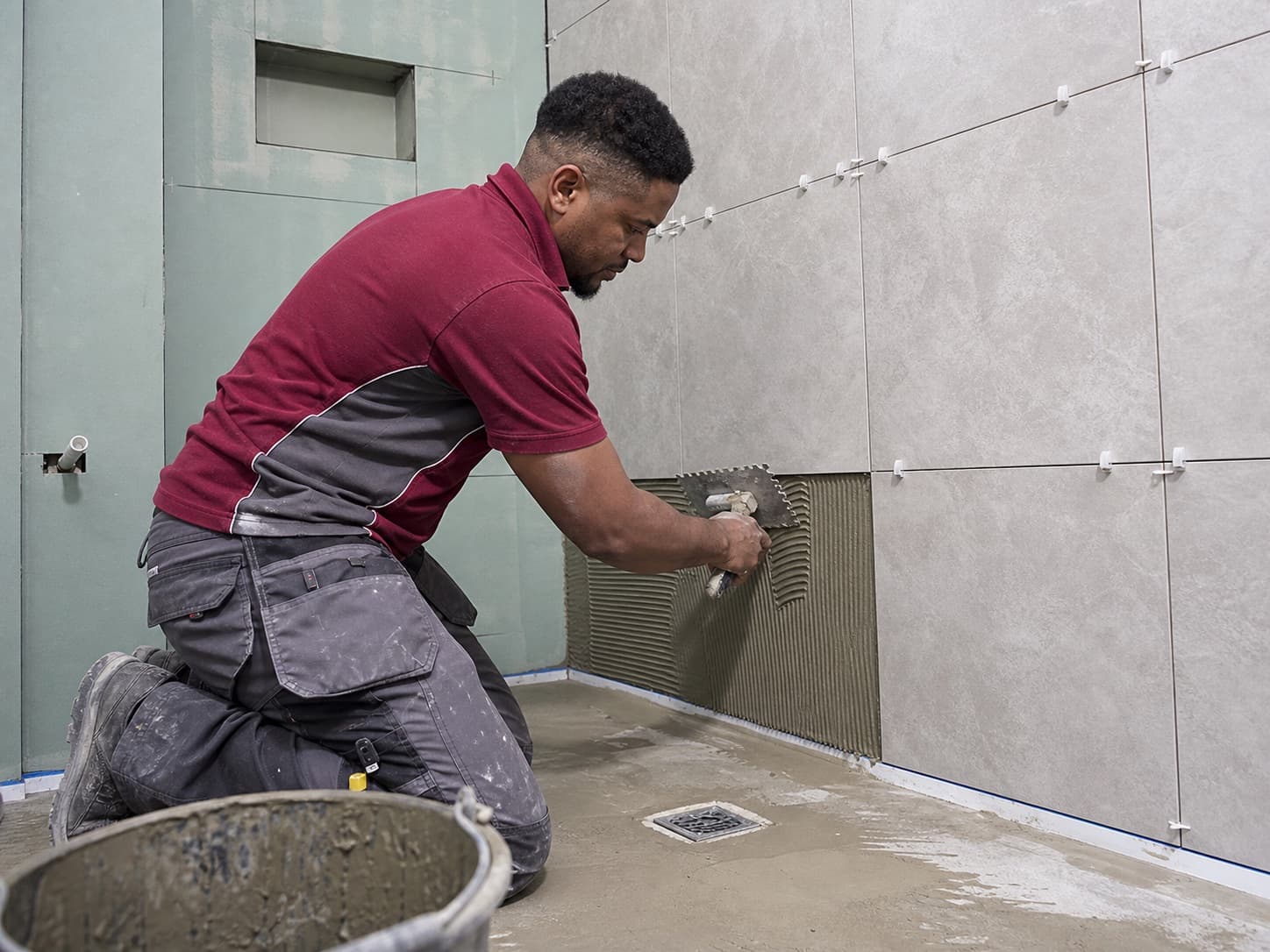
- Both hands in adhesive. You're back-buttering large-format tiles and working to an open time. A phone call during this window means a ruined tile or a missed enquiry. Most tilers choose the tile.
- Dusty, noisy conditions on a cut. A tile cutter in a bathroom or kitchen makes conversation impossible. Even if you could reach the phone, the caller would hear nothing useful.
- Multi-room projects that run all day. A full bathroom refit or a kitchen floor can keep you focused for 8–10 hours straight. Callers who ring during the day often want a quick word. What they get is voicemail.
- Enquiries outside your working hours. Homeowners browse tradespeople in the evenings. They ring the numbers they find and move on quickly if nobody answers.
How Telphi answers for a tiler
New tiling enquiries need some groundwork before a quote is possible. Telphi asks the questions that tell you whether a job is worth visiting.
Caller: "Hi, I'm looking for a tiler for my bathroom."
Telphi: "Great, thanks for calling. Is this a full bathroom retile, or a repair or partial job?"
Caller: "Full retile. Bath surround, floor, the lot."
Telphi: "Got it. Roughly how many square metres are we talking – do you know the room dimensions?"
Caller: "About 4 by 2, so eight square metres maybe?"
Telphi: "That's helpful. Have you already chosen your tiles, or would you need advice on that as part of the job?"
Caller: "I've got the tiles ready, just need fitting."
Telphi: "Understood. What's the property postcode, and are there any access issues – stairs to the bathroom, parking restrictions, anything like that?"
Caller: "Leeds, LS7. No access issues."
Telphi: "Perfect. I'll send you a link to book a measure-up visit so we can confirm the full scope."
Your summary lands in the app: job type, approximate area, tile supply situation, location, and access notes. You're quoting on a real job, not a vague enquiry.
What you get after every call
Each call generates a full summary, transcript, and recording in the Telphi app. If a caller describes a genuinely urgent situation – a leak that's damaged the existing tiles, for instance – Telphi can flag it for an immediate transfer.
Routine enquiries are handled end to end. You see only the calls that matter, with all the detail you need to quote accurately.
Booking
After qualifying the call, Telphi texts the caller a booking link. They pick a survey or site-visit slot from your available calendar. The appointment confirms automatically. No phone tag, no diary clashes.